

Designed around the product
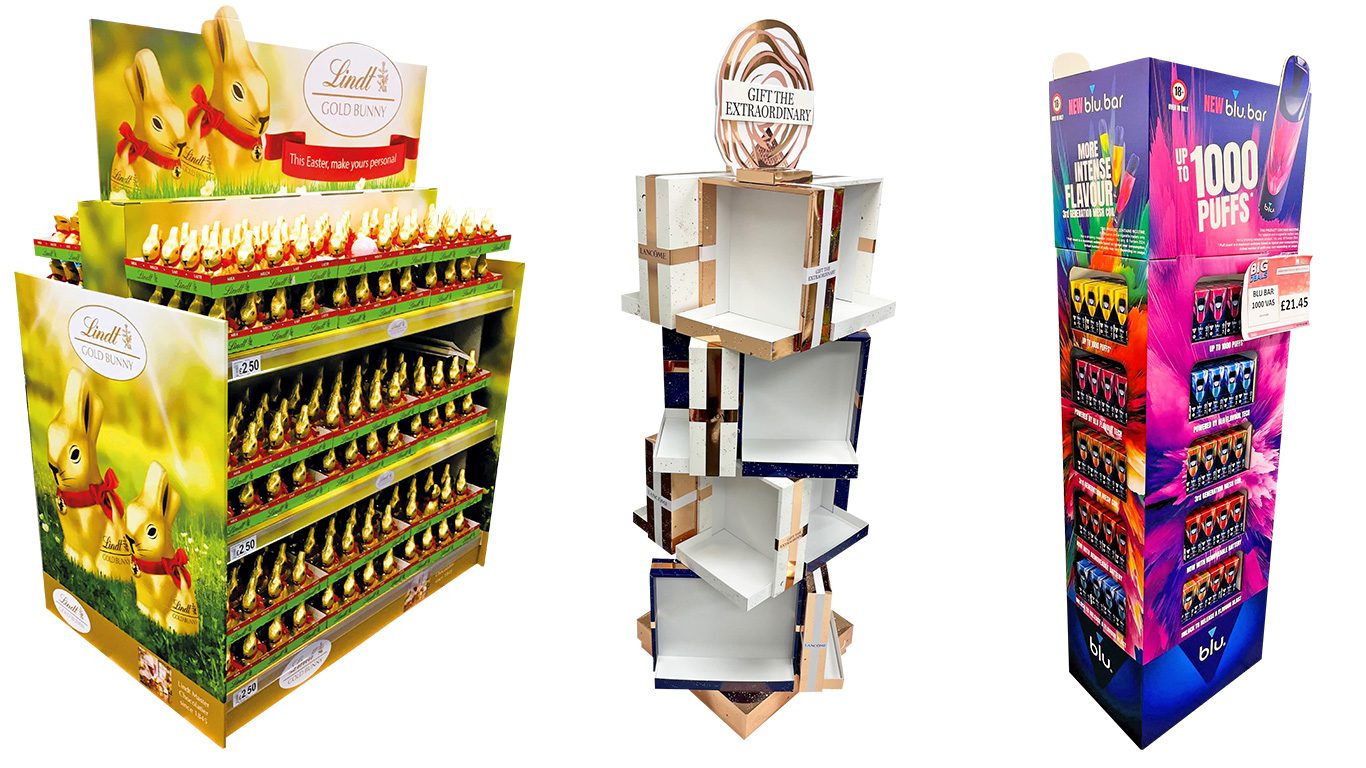
A Free-Standing Display Unit, or FSDU, is a self-contained retail display designed to present and merchandise products away from the store’s permanent shelving. P&D manufactures bespoke FSDUs around the stock, the campaign and the space available in store.
Product dimensions, weight, quantity and presentation all influence the internal structure, shelf arrangement and material specification.
A retailer may require a fixed external footprint, but that does not make the internal design standard. P&D can adjust the structure, blockers and spacers so that stock remains secure during transit when required, products are presented correctly in store, and the completed unit has the strength and integrity required for its intended use.
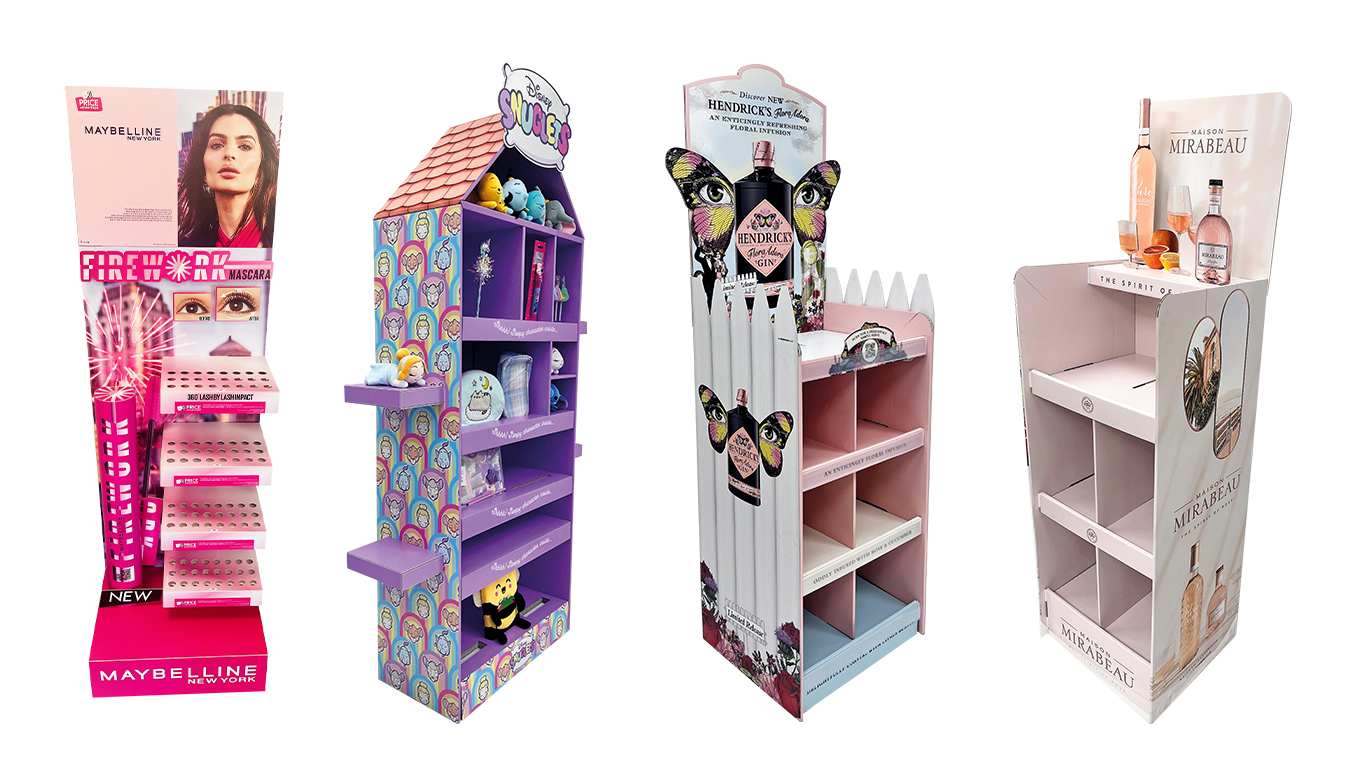
Greater freedom of structure and style
A conventional FSDU offers more flexibility of design and style than a Faster Display because it does not need to incorporate the Faster Display setup mechanism. This gives the structural and creative teams more freedom to develop the shape, product arrangement and presentation around the brief.
“Conventional” does not mean off the shelf. Each display is still developed around the product and retail requirements.
Conventional FSDU or Faster Display?
A conventional FSDU is best when structural and visual flexibility is the priority. A Faster Display is designed around a rapid setup mechanism and is best when one-person, tool-free setup within 60 seconds—and normally under 30 seconds—is the main requirement.
The right route depends on what the unit must hold, how it will travel and be installed, and how much structural freedom the campaign needs.
Compare the two display routes
| Requirement | Conventional FSDU | Faster Display |
|---|---|---|
| Design approach | Greater structural and styling freedom | Designed around a rapid setup mechanism |
| Setup | Depends on the agreed structure and delivery format | One person, no tools, within 60 seconds and normally under 30 seconds |
| Materials | EB flute card; may include plastic Corr-A-Clips to hold shelves in position | EB flute card with card as the only component |
| Loading | Engineered around the stock and required loading arrangement | 20 kg evenly distributed per shelf as the current baseline; heavier and uneven loads can be engineered |
| Delivery options | Flat-packed or pre-stocked on a reusable plastic MU pallet or a shipper pallet | Can be supplied flat-packed |
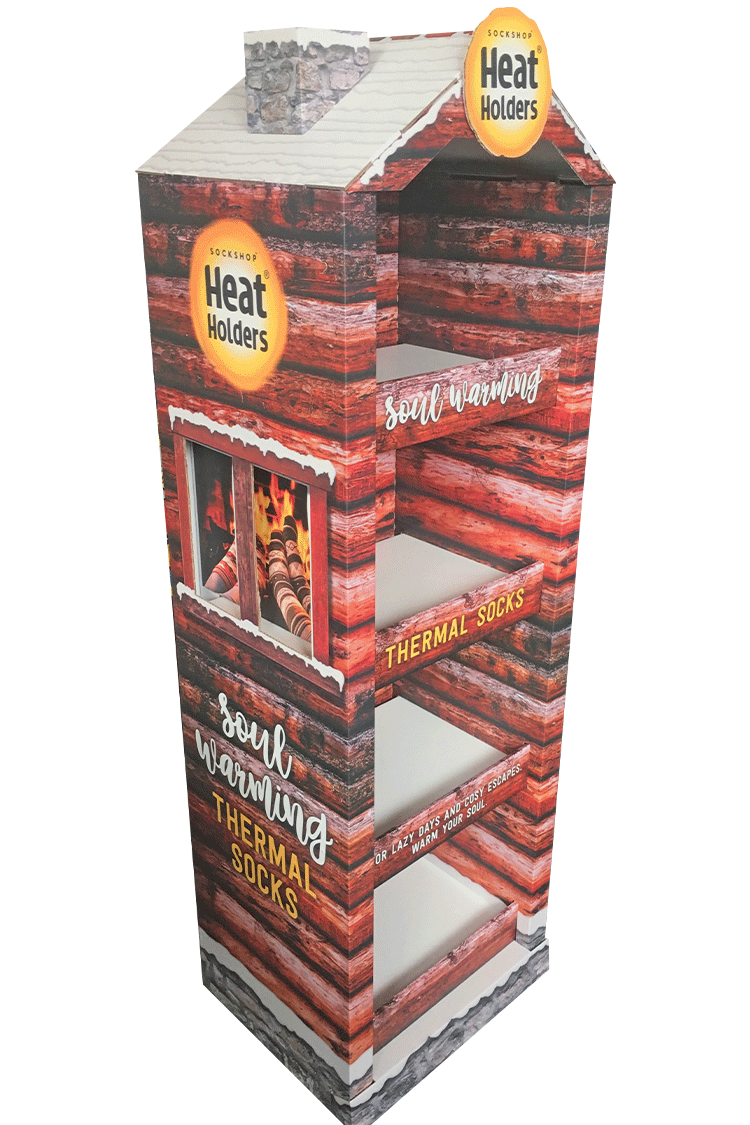
Developed around the products, retailer footprint, presentation and campaign—not taken from a shelf.
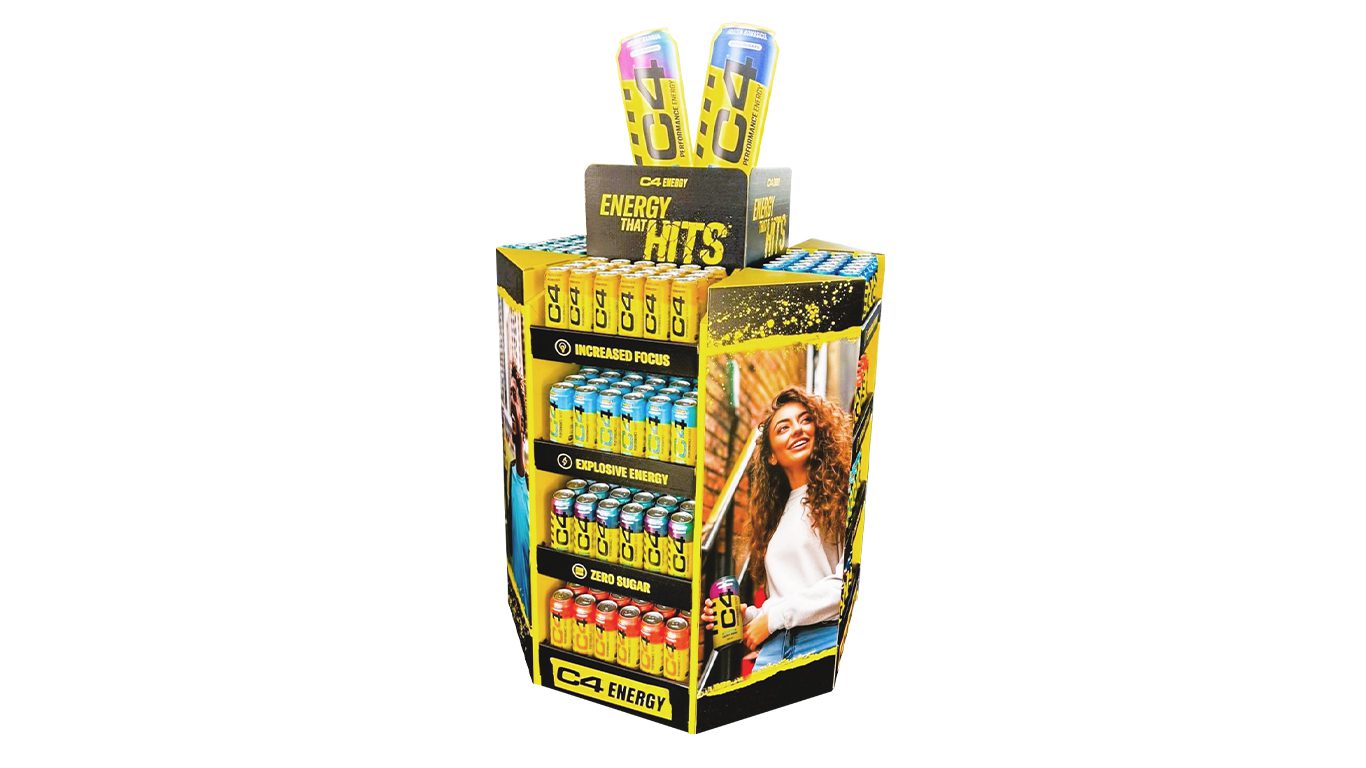
Internal structures, shelves, blockers and spacers can be adjusted around transit and in-store requirements.
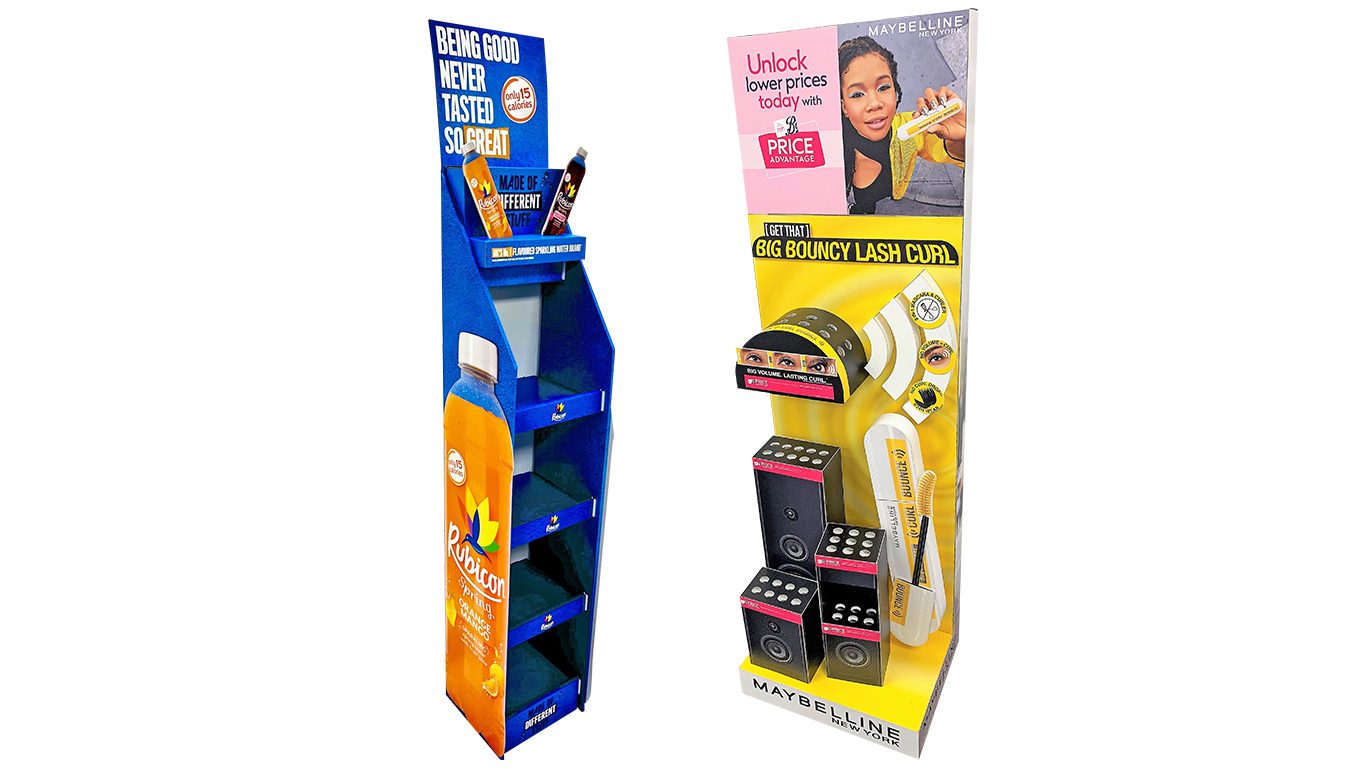
EB flute card can enter card recycling; any plastic Corr-A-Clips must first be removed for separate recycling.
Materials and components
Conventional FSDUs are manufactured using EB flute card. Depending on the design, they may also include plastic Corr-A-Clips to hold shelves in position.
Where Corr-A-Clips are included, they must be removed at the end of the campaign. The EB flute card and plastic clips can then enter their separate recycling streams.
Flat-packed or pre-stocked delivery
FSDUs can be supplied flat-packed for assembly later. They can also be sent out already stocked on a reusable plastic MU (multi-use) pallet or a shipper pallet when that is the right approach for the campaign. The MU pallet supports transport and retail replenishment; it is not a component of the FSDU itself.
The internal structure, blockers and spacers can be developed with transport as well as in-store use in mind. This helps protect and position the products where a pre-stocked display needs to travel through the supply chain.
What P&D needs for an FSDU brief
To begin developing the display, it is useful to provide:
- product dimensions and individual weights;
- the number of products or facings required;
- the required retailer footprint and any height restrictions;
- whether the unit will travel empty or pre-stocked;
- the expected loading arrangement;
- campaign artwork or brand guidelines;
- quantities, delivery locations and the required in-store date; and
- any retailer-specific packing, pallet or installation instructions.
P&D can then develop the internal specifications and structural solution around the stock and campaign.
FSDU questions
Are your FSDUs standard sizes?
Retailer guidelines may fix the external footprint, but the internal structure is developed around the stock. Shelves, blockers, spacers and other specifications can be adjusted for the product, presentation, transit and required structural integrity.
What are conventional FSDUs made from?
They are manufactured from EB flute card. Some designs may also use plastic Corr-A-Clips to hold shelves in place.
How is a conventional FSDU recycled?
The EB flute card and any plastic Corr-A-Clips must enter separate recycling streams. Remove the clips before placing the card and plastic into their appropriate recycling collections.
Can an FSDU be supplied flat-packed?
Yes. Conventional FSDUs can be supplied flat-packed. They can also be delivered pre-stocked on a reusable plastic MU pallet or a shipper pallet where required.
How much weight can an FSDU hold?
The capacity is engineered around the individual product and loading arrangement. P&D uses product dimensions, weight distribution, shelf arrangement and intended use to determine the appropriate construction.
What is the difference between a conventional FSDU and a Faster Display?
A conventional FSDU gives greater structural and creative flexibility. A Faster Display is the better fit when rapid, one-person, tool-free setup is the main requirement.